


Bud Farm: Idle Tycoon
4.727.51K Reviews
App Specs
- Version
- 1.29.1
- Updated On
- License
- Free
- Downloads
- 5,000,000+
- Developer
- LDRLY Games
- Categories
- Simulation
- Platform
- Android
Screenshots




 Analysis by AppCompare
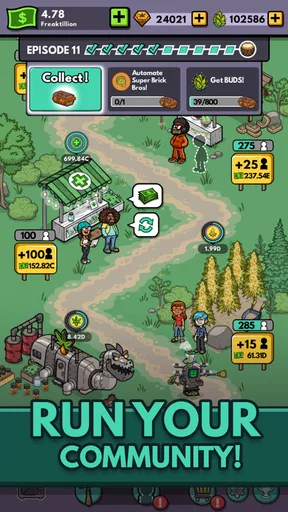
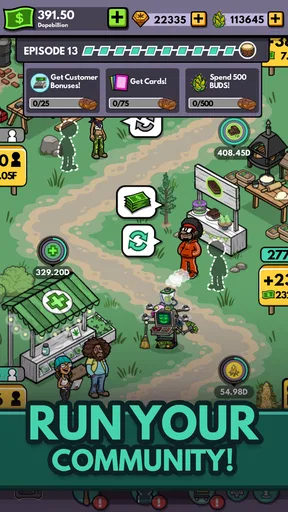
I went into Bud Farm: Idle Tycoon expecting a simple tap-and-wait game, and that is broadly what it is, but the better description is a small management routine built around timing. You grow cannabis plants, collect returns, expand the operation, and keep improving the farm while the game continues to make progress between visits. It is easy to understand in a few minutes, yet it has enough decisions to make the difference between a productive session and a wasteful one.
This is a free simulation game from LDRLY Games, aimed at mature players and available on Android from version 7.0 onward. It has reached over five million installs and holds a 4.7 average from around 199 thousand ratings, which gives a useful indication of its broad appeal. The current version is 1.29.1, and the game has been available since March 26, 2019. Those details matter less than the experience itself, but they make clear that this is an established idle title rather than a brand-new experiment.
My main advice is to treat it as a game for short, repeatable visits rather than a full-time strategy simulator. The satisfaction comes from checking what has accumulated, deciding where the next improvement should go, and leaving the farm in a better position for the next return. If you enjoy watching a production chain gradually become more efficient, there is plenty to like here. If you want direct control, deep tactical combat, or a completely hands-off experience with no spending pressure, the fit is weaker.
How the everyday farm routine works
I approach the everyday farm routine as a quick check-in rather than a task list: collect what is ready, decide what most needs improving, and leave with a clear next step. That simple order helps me avoid spending just because an upgrade is available. From there, it is worth looking at how the game’s screens and navigation shape those short visits.
Start with collection, then identify the current bottleneck
The basic workflow is straightforward. I open the farm, collect what is ready, look at which part of the operation is slowing progress, and spend resources where that slowdown is most noticeable. That last step is more important than tapping quickly. Idle games often tempt you to upgrade whatever button is immediately available, but a better habit is to ask whether the upgrade improves production, storage, unlocking speed, or the time needed before the next useful visit.
For a casual player, a normal session can take place during a coffee break. I would collect the available income, check whether a new plant or building option has become affordable, make one or two sensible upgrades, and close the game. The farm is then positioned for another visit later. This makes the game comfortable for people who like progress in small pieces, especially when they do not want to commit to a long uninterrupted play session.
The game’s central appeal is the loop of tapping, building, and upgrading, but the order of those actions changes how satisfying the loop feels. Early progress is usually about opening up the farm and understanding what each improvement contributes. Later, the same actions become a question of efficiency: should I improve the part that produces more, the part that allows me to collect more, or the part that helps me reach the next milestone sooner?
Worth Reading Before You Choose

EA SPORTS FC Mobile 26 Is a Bigger Football Game, but It Takes Time

Flipboard Shows What News Apps Must Do Beyond the Feed

Switching to Android Auto Means Rethinking Your Driving Routine

Google Calendar Makes a Crowded Week Easier to Manage

Ludo King Makes the Most of the Minutes Between Plans

Baby Panda World Brings Quick Play to Modern Phones, but Its Game Library Feels Busy
Use short sessions instead of chasing constant activity
Although the theme suggests a farm that should always be busy, I found that repeatedly reopening the game without a clear purpose is not especially rewarding. The better rhythm is to return when there is a meaningful collection or upgrade decision waiting. This is one of the first useful habits for new players: do not confuse frequent tapping with smart management.
That approach also makes the idle design work in your favor. When I leave after making a clear improvement, the next visit has a reason. When I stay too long simply watching counters rise, the game can start to feel repetitive. Bud Farm: Idle Tycoon is strongest when it fills spare moments, not when it is treated like a conventional game that demands continuous attention.
Know what kind of progress you are buying
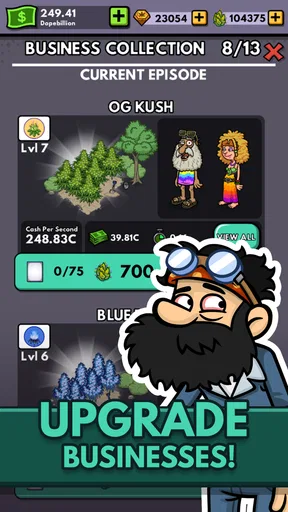
Every upgrade should be judged by the kind of progress it creates. A production improvement may increase the speed of the farm, while a capacity-related improvement may prevent income from sitting unused. An unlocking improvement can be valuable because it opens a new layer of choices, even if its immediate return looks smaller. I recommend thinking in terms of the next few visits rather than only the biggest number on the screen.
This is also where the game differs from a basic clicker. The theme and presentation make the activity feel like running a growing business, but the underlying decisions still reward patience. Spending everything the moment it becomes available can leave the farm awkwardly balanced. Keeping a small reserve for a more meaningful upgrade often produces a smoother session, particularly when you are close to opening a new area of the operation.
Settings and device habits worth checking
There is no reason to leave every option untouched simply because the game is casual. I recommend checking the settings menu early, especially for sound, music, notifications, and any account or support choices that are visible on your device. The exact options can vary with the version and platform, so I would make the decision based on how you intend to play rather than assuming every player needs the same setup.
For a short-session idle game, notifications can be useful when they remind you that a collection or action is ready, but they can also turn a relaxing routine into a stream of interruptions. I prefer enabling only alerts that genuinely bring me back for a worthwhile decision. If a notification merely encourages another quick check with nothing important to do, turning it off makes the experience calmer.
Sound is similarly personal. The farm’s theme benefits from a little atmosphere, but I often lower or disable audio when playing in public or while listening to something else. This does not change the management loop, and it makes the game easier to fit into ordinary routines. On a smaller phone, I also keep the interface uncluttered by avoiding unnecessary background activity before I begin a session.
Because this is a free game with optional purchases, I would also check the device’s purchase controls before handing the phone to a child or using a shared account. The mature 17+ rating is an important part of the decision, not a minor label. The theme is adult-oriented, and the game is not something I would select as a general family title simply because the mechanics are easy to understand.
Build a repeatable collection pattern
Experienced play becomes less about discovering buttons and more about following a reliable inspection order. I like to collect ready income first, review the most constrained part of the farm second, and only then spend on improvements. This prevents the common mistake of upgrading one area and forgetting that another part is preventing the benefit from being used fully.
A second useful pattern is to make one deliberate upgrade before leaving instead of scattering resources across several minor improvements. That creates a clear before-and-after comparison on the next visit. If the farm feels faster or reaches its next target more comfortably, the choice was probably sound. If nothing feels different, the upgrade may have been too small or aimed at the wrong bottleneck.
Another practical tip is to play around your own schedule. If I know I will be busy for several hours, I leave the farm in a state that can accumulate without requiring immediate attention. If I expect to return soon, I can choose a shorter-term improvement and check the results while the decision is still fresh. This habit makes the idle timer feel like part of the strategy rather than a reason to open the app randomly.
Spend premium resources carefully
The free entry point is helpful, but the game includes in-app purchases ranging from $0.99 to $199.99 per item. That wide range is worth taking seriously. I would not spend simply because a timer or upgrade feels slow. First, I would decide whether the purchase changes the way I want to play or merely removes a few minutes of waiting.
For me, the safest rule is to enjoy the normal progression before considering any optional spending. If the ordinary loop is already fun, a purchase can be evaluated as a convenience. If the game feels dull without acceleration, paying is unlikely to fix the underlying mismatch. This is especially relevant for idle games, where waiting is part of the design rather than an accidental obstacle.
New players should also avoid comparing their farm with someone else’s progress when the other person may have spent money or invested much more time. The useful comparison is with your own previous session: did the farm collect more comfortably, did the next upgrade arrive sooner, and did your routine become easier? Those are better measures of value than simply pursuing the largest visible number.
Where faster play helps and where it does not
Fast play in Bud Farm: Idle Tycoon does not mean tapping at maximum speed. It means reducing wasted visits. I get more from the game when I decide in advance what I am checking: collection, bottleneck, next upgrade, exit. That four-step routine is faster than opening every menu without a plan, and it keeps the game from taking over a break that was meant to last only a few minutes.
It is also useful to separate progress goals. One visit can focus on improving the farm’s earning rhythm, while another can focus on reaching an unlock. Trying to optimize both at once can lead to awkward spending, especially when the available resources are limited. Choosing one priority makes the result easier to understand and gives the next session a clear purpose.
I would not recommend leaving the game open constantly just to watch numbers move. That can drain attention without adding much decision-making, and it misses the point of an idle structure. The strongest pattern is intentional absence: make a good choice, close the game, and return when the accumulated progress creates another meaningful choice.
Understand the limits of the simulation
The game presents itself as a farm-management simulation, but it is not the right choice if you want detailed agriculture, realistic economics, or a wide sandbox of independent systems. Its decisions are designed for accessible progression. You are managing a stylized production loop, not modelling every part of a real business or crop cycle.
That simplicity is both a strength and a limitation. It makes the game welcoming, but players who need constant novelty may eventually find the routine predictable. The theme provides personality, while the core structure remains familiar to anyone who has played idle tycoon games. Compared with a traditional farming game, this is less about moving around a landscape and more about improving a chain of output. Compared with a pure clicker, it offers a stronger sense of building an operation, but it still asks you to accept repetition.
The mature rating also narrows its audience. Someone looking for a neutral business simulator should choose a different game, even if the economic loop sounds appealing. Likewise, parents seeking a child-friendly management game should not use the simple controls as a reason to overlook the age classification.
Another limit is the role of waiting. If you prefer games where every minute offers a new mechanical challenge, the idle pacing may feel too passive. It is better suited to players who enjoy checking gradual progress and making occasional choices. I found that the game is most enjoyable when I accept that not every visit will produce a dramatic change.
Who should play it and who should skip it
I would recommend Bud Farm: Idle Tycoon to someone who likes incremental progression, playful business themes, and games that can be checked in brief sessions. It is particularly suitable for a player who wants a low-pressure routine with enough decisions to avoid being a completely empty clicker. The free download makes it easy to test that rhythm without committing upfront.
I would point a different player elsewhere if they want a serious farm simulator, a story-led adventure, competitive strategy, or a game with no adult theme. I would also be cautious recommending it to anyone who dislikes optional purchases, because the presence of items at very different price points can make the progression feel less comfortable for players who prefer a strictly fixed experience.
For people choosing between this and a conventional farming game, the decision comes down to control. Choose Bud Farm: Idle Tycoon if you want the farm to keep developing while you are away and you enjoy making broad upgrade decisions. Choose a traditional farming title if you want to plant individual crops, move around actively, decorate a property, or control each task directly.
My final view after settling into the routine
Bud Farm: Idle Tycoon works because it keeps its promise simple: build a themed operation, improve its output, and return to see what has changed. I like the way a few sensible habits make the experience smoother. Collect before spending, identify the bottleneck, make one purposeful improvement, and leave the farm ready for the next visit. Those choices sound small, but they prevent the game from becoming a random sequence of taps.
The weaknesses are just as clear. The loop can become repetitive, waiting may frustrate impatient players, and the mature theme will not suit everyone. The optional purchase range also means I would play with a firm spending limit rather than treating every shortcut as automatically worthwhile. None of those issues ruins the game, but they define the kind of player who will enjoy it.
My verdict is positive for the right audience. This is a polished-feeling idle simulation for short, repeatable sessions, not a deep agricultural sandbox. LDRLY Games has built something approachable that rewards steady habits more than frantic attention. If the idea of checking a growing farm, making one smart upgrade, and returning later sounds relaxing, it is worth trying for free. If you need constant action or detailed control, you will probably be happier with a more hands-on alternative.
In practical terms, the best way to play is to make the farm fit your day rather than rearranging your day around the farm. That is where the game finds its strongest balance: enough progress to make each return satisfying, enough choice to give the routine purpose, and enough restraint to let you put the phone down when the useful work is done.
Pros
- Easy idle progression
- even when you are not actively playing.
- Bright cartoon graphics give the game a cheerful
- relaxed atmosphere.
- Many crops
- buildings
- and upgrades provide steady long-term goals.
- Simple controls make it accessible for casual players of all ages.
- Frequent tasks and events add variety beyond the basic farming loop.
Cons
- Progress can feel slow without watching ads or spending premium currency.
- The gameplay becomes repetitive after the initial upgrades are completed.
- Some upgrades and resources are heavily tied to timers.
- Pop-ups and promotional offers may interrupt the farming experience.
- An internet connection may be required for certain features and rewards.
FAQs for Bud Farm: Idle Tycoon
What is Bud Farm: Idle Tycoon?
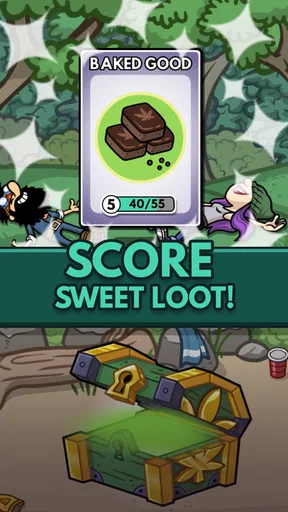
Bud Farm: Idle Tycoon is a casual idle-management game in which you build and expand a cannabis-themed farm. You begin with a small operation and gradually unlock new growing areas, production stations, characters, and upgrades. The game focuses on automation, resource management, and steady progress, allowing you to earn in-game currency even when you are not actively playing.
How does the gameplay work in Bud Farm: Idle Tycoon?
The main gameplay loop involves planting crops, collecting products, upgrading facilities, and hiring or improving workers who automate different tasks. As your farm develops, you can increase production speed, storage capacity, and earnings. Progress is designed to continue over time, but regularly opening the app is useful for collecting rewards, completing objectives, and deciding where to invest your resources next.
Is Bud Farm: Idle Tycoon free to download and play?
Bud Farm: Idle Tycoon can generally be downloaded and played for free, although it includes optional in-app purchases. These purchases may provide premium currency, boosts, special bundles, or faster progression. You can enjoy the core experience without spending money, but progress may feel slower at certain points. The game may also contain advertisements or optional rewarded videos.
Does Bud Farm: Idle Tycoon require an internet connection?
An internet connection is recommended for Bud Farm: Idle Tycoon because online access may be needed to synchronize progress, display advertisements, claim certain rewards, and process purchases. Some basic gameplay may continue temporarily while offline, depending on the version and device, but offline earnings or features may be limited. Connecting regularly helps ensure that your progress is saved correctly.
Is Bud Farm: Idle Tycoon suitable for children?
Bud Farm: Idle Tycoon uses colorful cartoon graphics and accessible idle-game mechanics, but its theme is centered on growing and selling cannabis. For that reason, it may not be appropriate for young children, even though the presentation is lighthearted and non-realistic. Parents should check the official age rating, review the in-app purchase settings, and decide whether the subject matter is suitable.


